

Reverse cycle ducted heating and cooling systems provide year-round indoor comfort by heating or cooling multiple rooms through a network of ducts and vents. They are a popular choice for Melbourne homes and businesses because they offer a convenient way to manage indoor temperatures throughout changing seasons.
However, achieving reliable performance depends on more than choosing the right air conditioning unit. Careful installation is essential for energy efficiency, consistent airflow, system longevity and household comfort.
-
Ensuring the Right System Size
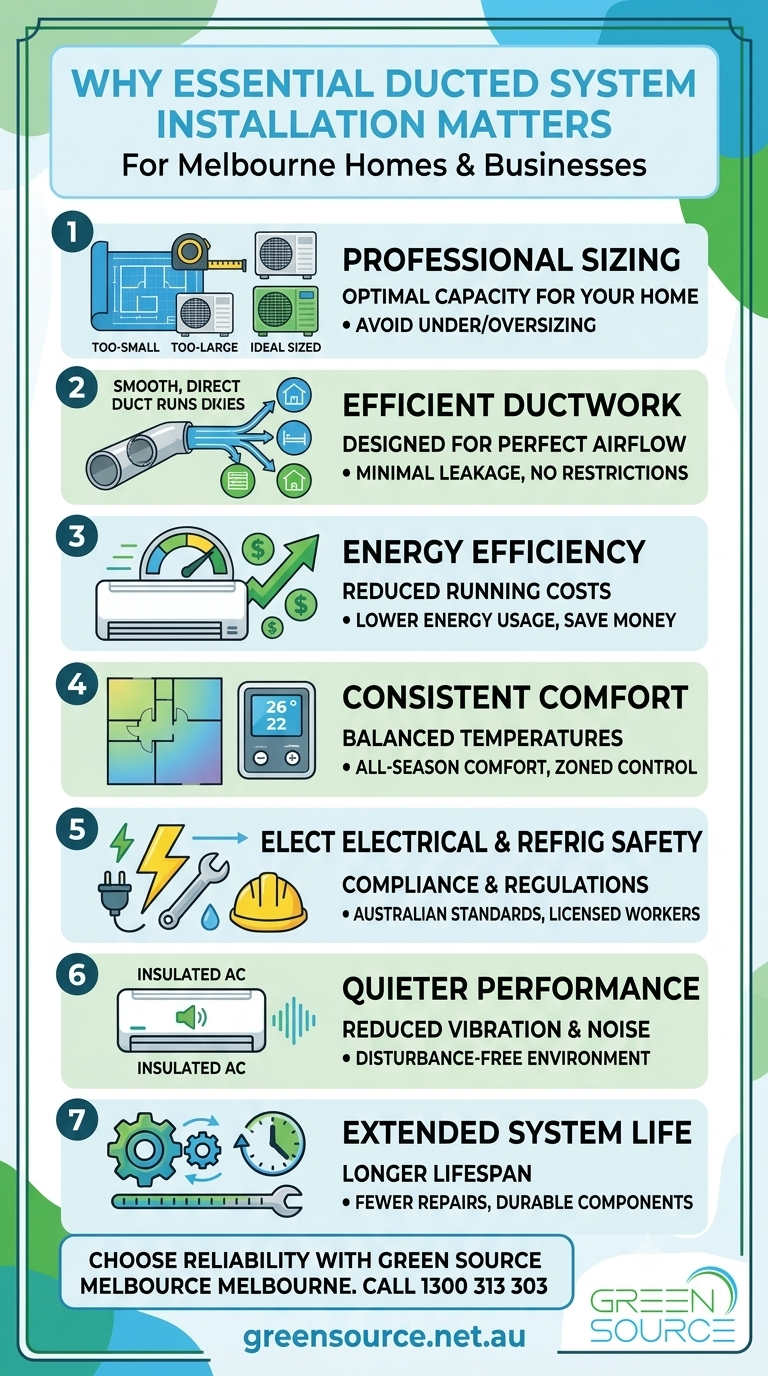
One of the most important steps in installing reverse cycle ducted heating and cooling in Melbourne is selecting a system that suits the property.
An undersized system may struggle to maintain comfortable temperatures during Melbourne’s hot summers and chilly winters. Conversely, an oversized system may cycle on and off too frequently, potentially reducing efficiency and increasing wear.
Professional installers assess several factors, including floor area, ceiling height, insulation, window orientation, glazing and the number of occupants. This helps determine the appropriate heating and cooling capacity for the building.
-
Designing an Efficient Ductwork Layout
Ductwork distributes conditioned air throughout the property. If ducts are poorly positioned, excessively long or inadequately sized, the system may experience airflow restrictions and uneven temperatures.
Careful duct design considers the building’s layout, room requirements, duct lengths and available installation space. Installers also aim to minimise unnecessary bends and prevent air leakage through suitable sealing.
For Melbourne properties, a well-designed duct network helps deliver consistent comfort across bedrooms, living areas and other frequently used spaces.
-
Improving Energy Efficiency
Reverse cycle systems transfer heat rather than generating it directly through conventional electric resistance heating. This can make them an energy-efficient option when properly selected and installed.
However, poor installation can reduce these advantages. Incorrect refrigerant piping, leaky ducts, restricted airflow and unsuitable equipment placement may affect performance.
Professional reverse cycle air conditioner installation in Melbourne helps ensure that components are fitted according to manufacturer specifications and relevant requirements. Correct commissioning also helps verify that the system operates as intended.
Homeowners should remember that energy consumption still depends on system efficiency, usage patterns, insulation and thermostat settings.
-
Providing Consistent Heating and Cooling
Melbourne’s weather can change considerably throughout the year, making dependable temperature control important.
A carefully installed ducted system helps distribute warm or cool air more evenly throughout the home. Where zoning is available, occupants can control temperatures in selected areas rather than conditioning the entire property unnecessarily.
Installers must position vents appropriately and balance airflow to reduce hot and cold spots. Correct thermostat placement is also important because direct sunlight, draughts or nearby heat sources can affect temperature readings.
-
Meeting Electrical and Refrigerant Safety Requirements
Reverse cycle ducted systems involve electrical connections, refrigerant circuits and mechanical components that require professional handling.
Installation must comply with applicable Australian electrical safety requirements, building regulations and manufacturer instructions. Refrigerant work must be completed by appropriately licensed or authorised personnel as required by Australian law.
Installers should also consider safe outdoor unit placement, drainage, service access and ventilation clearances. These measures help reduce operational risks and make future maintenance easier.
-
Reducing Noise and Extending System Life
Incorrectly mounted equipment, poorly supported ducts and unsuitable outdoor unit locations can contribute to unwanted noise and vibration.
Careful installation includes securing components properly, providing appropriate clearances and following the manufacturer’s mounting recommendations. Condensate drainage should also be arranged correctly to help prevent water-related problems.
Although regular maintenance remains necessary, a properly installed system is less likely to experience avoidable problems caused by poor workmanship.
-
Why Professional Installation Matters in Melbourne
Choosing an experienced heating and cooling installer helps ensure the system is designed for the property’s needs and local conditions. A professional should explain the proposed layout, system capacity, zoning options, expected running costs and ongoing maintenance requirements.
Before installation, ask about relevant licences, warranties, commissioning procedures and compliance documentation. After installation, request guidance on operating the controls, cleaning filters and scheduling routine servicing.
Choose Reliable Reverse Cycle Ducted Heating and Cooling in Melbourne
Careful installation helps reverse cycle ducted heating and cooling systems deliver consistent comfort, efficient operation and dependable performance. From selecting the right capacity to designing ductwork and completing safety checks, every stage matters.
If you are considering electric ducted heating and cooling in Melbourne, consult a qualified professional to find a system that suits your property, comfort requirements and energy budget.
Enjoy Year-Round Comfort With Professional Ducted Heating and Cooling
Looking for reliable reverse cycle ducted heating and cooling in Melbourne? Choose an experienced installer like Green Source to ensure your system delivers efficient performance, consistent airflow and lasting comfort. Contact Green Source for a qualified heating and cooling specialist today to discuss your property’s needs and find the right solution for every season. Call 1300313303 to get started.
Frequently Asked Questions
- Why is professional installation important for reverse cycle ducted heating and cooling?
Professional installation ensures the system is correctly sized, ductwork is properly designed, airflow is balanced and electrical and refrigerant connections meet applicable requirements. This helps improve efficiency, comfort, safety and system reliability.
- How does reverse cycle ducted heating and cooling work?
A reverse cycle system transfers heat between indoor and outdoor air. In summer, it removes heat from inside the property, while in winter, it extracts heat from outdoor air and transfers it indoors. Ducts distribute conditioned air throughout the building.
- How do installers determine the right ducted system size for a Melbourne home?
Installers assess factors such as floor area, insulation, ceiling height, window placement, building orientation and the number of occupants. These calculations help determine the appropriate system capacity for the property’s heating and cooling requirements.
- Can reverse cycle ducted heating and cooling reduce energy bills?
Yes, an appropriately sized and efficiently installed system can help reduce energy consumption compared with less efficient heating and cooling options. Actual savings depend on the system’s efficiency, electricity tariffs, insulation, thermostat settings and usage habits.
- Why is ductwork design important during installation?
Proper ductwork design helps distribute air evenly, minimise leakage and reduce airflow restrictions. Well-positioned ducts and correctly balanced vents can improve comfort across different rooms while helping the system operate efficiently.
- How often should a reverse cycle ducted heating and cooling system be serviced?
Annual professional servicing is a useful general guideline, although the manufacturer’s recommendations and usage conditions may require a different schedule. Filters should be checked and cleaned as directed, while professional inspections can identify airflow problems, drainage issues and other maintenance needs.

